
We may earn money or products from the companies mentioned in this post.
If you have clothes you don’t wear anymore but are in good condition, consider hosting a clothing swap!
Why host a clothing swap?
A clothing swap helps people:
- Get free clothes
- Clear out items they no longer need or want
- Connect with others in their community
- Keep clothing out of landfills
Clothing swaps allow people to add to their wardrobe at no cost. Plus, it’s fun! This can be a great get-together for friends, colleagues, faith groups, or for a community organization. I’ve gone to swaps at homes, a pub and a school.
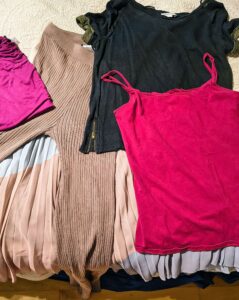
Some swaps might be focused on a demographic, such as kids’ clothing or business attire, or might be general.
I once attended a clothing swap run by high school students as a class project – this turned out to be a great place for me to get clothes for my preteen daughter – not much for me, but we walked away pretty happy with our haul, and it was a fun activity for us to do together.
What should you bring to a clothing swap?
Please make sure items are clean, free of stains, nothing in the pockets, and in good repair. Think of a clothing swap as giving clothes to a friend – if the item is too worn out to give a friend, please don’t bring it to a swap. Bring anything that is no longer useful to you but would be appreciated by the right person.
If the host has set any guidelines for the type of clothing to bring, be sure to follow them to help the event flow smoothly.
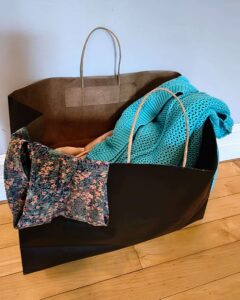
Bring your own bag or basket for your new clothes.
Tips for clothing swap hosts:
Set up tables or bins for the clothes. If it is a larger swap and you have the space, you might want a table for different types of items – for example, a table for pants, a table for shirts, jackets, accessories, etc.
Have some extra clear bags or boxes on hand for the clean-up of leftover clothes.
Everything is first-come, first-served. A mirror or somewhere to try things on is nice, but not strictly necessary.
What to do with the leftover clothes after the swap
Consider sorting the remaining items into categories, and checking with local organizations in need of clothes what they are in need of. For example, out of the cold shelters might be looking for winter clothing, or groups that support families might need kids’ clothing.
If your community has a program that helps with employment, sometimes they collect professional clothes for people entering the workforce to wear to job interviews. After that, take the rest to a donation bin or thrift store that accepts clothing donations.
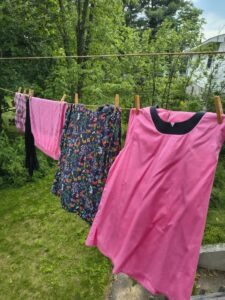
Enjoy your new clothes! I will often wash secondhand clothes before I wear them, and check if any repairs are needed.
Secondhand clothes might need some alterations to reach their full potential. If you sew and want to learn more about doing your own alterations, you can get my free alterations beginner guide here.